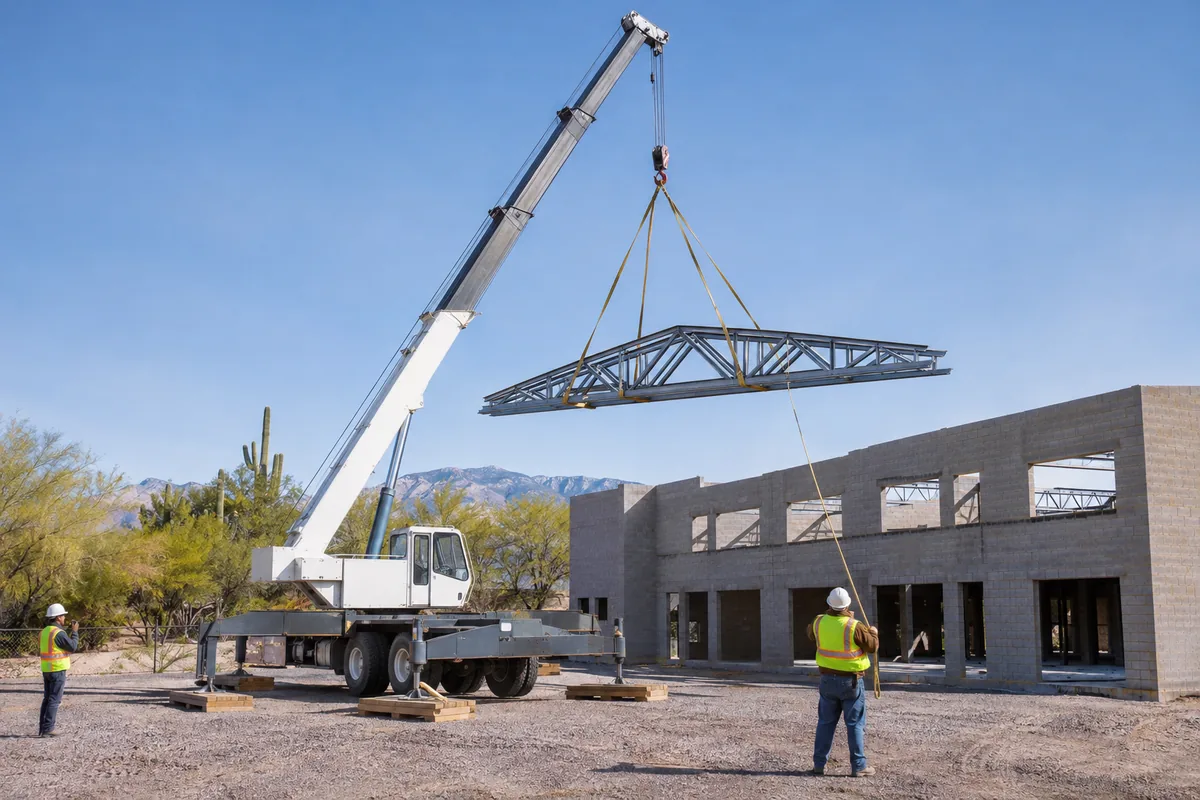
What’s Included in an Operated Crane Rental (and What You Still Handle)?
The short answer: An operated crane rental gives you the crane plus a certified operator who drives it to your site, sets it up and runs every lift. The crane company is also responsible for the machine itself: its maintenance, inspections and load charts. What it does not cover is your job site. You still provide safe access, firm and level ground for the outriggers, information about what is buried under the setup area, accurate load weights, and permits for anything on your property or work zone. Whether a rigger, signal person, rigging gear, travel time or a written lift plan are included varies by company, so confirm those items in writing before you book.
That split matters because most lift-day problems come from the gaps between the two lists: a truck that can’t get through a gate, an outrigger set over a septic tank, or a load that weighs more than the paperwork said. This guide walks through both sides.
Operated vs. bare crane rental
There are two basic ways to rent a crane:
- Operated rental (often called “operated and maintained”) means the crane arrives with the crane company’s own operator, and the company keeps the machine maintained and inspected. You pay for the crane and the operator’s time together, and you get a professional who knows that specific machine.
- Bare rental means you rent the machine only. Your company typically supplies a certified operator, handles inspections and upkeep during the rental, and takes on much more of the responsibility for how the crane is used.
Bare rental can make sense for a large contractor with its own certified operators and crane program. For most builders, HVAC and sign contractors, facility managers and property owners, operated rental is the practical choice: one call covers the machine, the operator and the know-how to set it up safely.
What the crane company typically brings
In an operated rental, you can generally expect the crane company to provide:
| Item | What it covers |
|---|---|
| The crane | A machine sized for your load, reach and height, in working order |
| A certified operator | Drives the crane to the site, sets it up and runs the lifts |
| Machine inspections | The daily and periodic checks OSHA’s crane rule requires before and during use |
| Load charts and setup | Uses the manufacturer’s chart to confirm the lift is within capacity at the radius needed, and levels the crane on its outriggers |
| Its own insurance | Coverage for its equipment and crew (ask for a certificate if your contract needs one) |
Under OSHA’s crane rule for construction, crane operators must be certified or qualified for the type of crane they run. Hook Crane Services’ operators hold NCCCO and MSHA operator certifications, which also covers regulated mining and industrial sites.
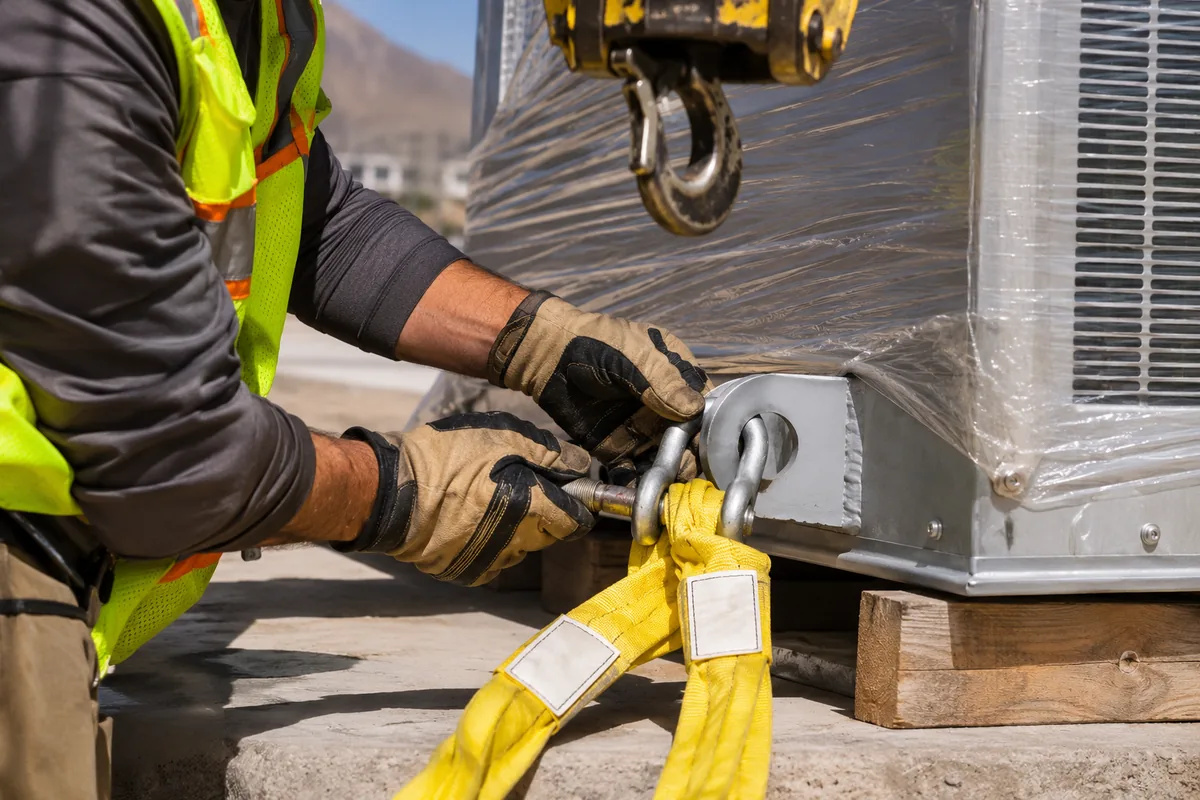
Hook Crane Services has provided operated crane service in Tucson since 1978. Its staff of operators, riggers, drivers and job coordinators serves Southern Arizona with equipment ranging from a 17-ton boom truck with a 90-foot boom and jib to a 165-ton crane with a 260-foot boom and jib.
What you still provide
Even with a full operated rental, these items stay on the customer’s side of the line:
- Access. A clear route for the crane and any support truck: gate widths, overhead clearance, turning room and a path that avoids soft shoulders, fresh concrete and landscaping you want to keep.
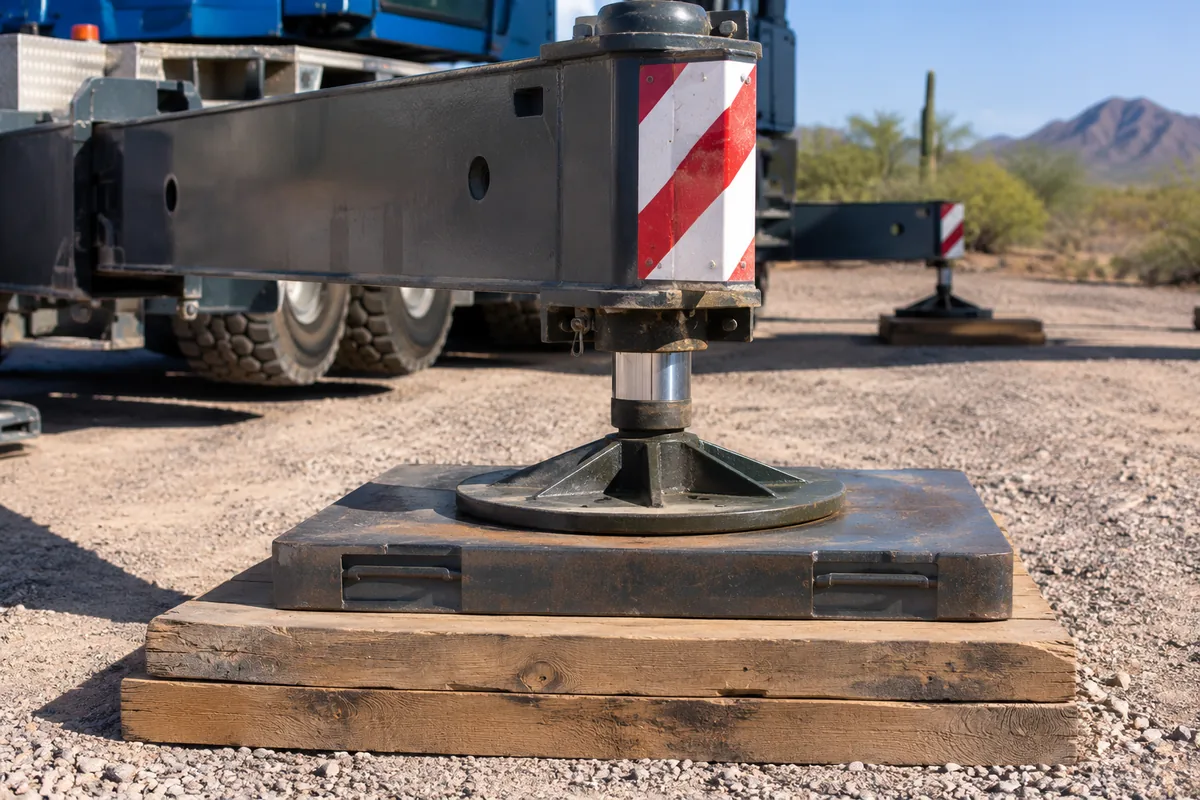
- Ground for the outriggers. OSHA’s crane ground conditions rule requires the setup area to be firm, drained and graded well enough for the crane’s level and support requirements. It makes the entity in control of the site responsible for making sure that ground preparation is done.
- What’s under the ground. The same rule requires the controlling entity to tell the crane user and operator about known hazards beneath the setup area, such as voids, tanks or utilities. Septic tanks, irrigation lines, vaults and shallow utilities are common surprises on Southern Arizona properties.
- Accurate load information. The weight of each piece, its dimensions, where it is picked and where it is set, plus the height. The crane is sized from these numbers, so a guess can mean the wrong machine on the day. Learn how load charts set lifting capacity.
- Power line information. OSHA’s power line safety rule requires planning before work whenever any part of the crane or load could come within 20 feet of a line. Point out overhead lines on the site visit so they can be planned around or de-energized by the utility.
- Permits and site control. Street or lane closures, property access, and coordination with other trades so the swing area is clear at lift time.
- A ready load. Equipment disconnected and drained, curbs or roof openings prepared, and the people who will receive the load at the set point.
For a step-by-step version of this list, see how to prepare your site before the crane arrives.
What to confirm in the quote
These items are handled differently from one crane company to the next, and from one job to the next. Ask about each one so quotes are comparable:
| Ask about | Why it matters |
|---|---|
| Rigger and signal person | OSHA’s signal person requirement applies when the operator can’t see the load or the set point. A qualified rigger must rig the load when workers hook, unhook or guide it in the fall zone. Know whether they come with the crane or from your crew. |
| Rigging gear | Slings, shackles, spreader bars and tag lines may be included or billed separately. |
| Billing basis and minimums | Many companies bill hourly from the yard and back (“portal to portal”), often with a minimum call. Travel time to outlying towns adds up. |
| Support trucks | Larger cranes may need extra trucks for counterweight or gear. |
| Lift plan | Complex, heavy or tight lifts may call for a written lift plan. Ask who prepares it and what it costs. |
| Insurance and paperwork | Certificates of insurance, additional-insured wording and any site safety orientation. |
| Standby and cancellation | What happens if the load isn’t ready or wind stops the lift. |
Our guide to fees that are easy to miss in a crane quote covers the cost side in more detail.
What happens on lift day
A typical operated lift runs in this order:
- Arrival and walk-around. The operator checks the route in, the setup spot and the swing area, and confirms the load details with your site lead.
- Setup. The crane is positioned, the outriggers are extended onto pads or mats, and the machine is leveled. If the ground isn’t adequate, the operator tells the site’s controlling entity so it can be fixed before lifting.
- Inspection and rigging. The crane gets its shift inspection, and the load is rigged with gear rated for its weight.
- Pre-lift briefing. Everyone agrees on the signals, who guides the load with tag lines, and where people stand outside the fall zone.
- The lift. The load is picked, tested just off the ground, then moved and set at the planned point.
- Breakdown. Rigging is removed, outriggers come in and the crane leaves the site the way it came.
Pre-booking checklist
Have these ready when you call for an operated crane rental and you’ll get a faster, more accurate recommendation:
- Job address and the date or window you need
- Load weight, dimensions and number of picks
- Distance from where the crane can park to the set point, and the set height
- Photos of the access route, setup area and any overhead lines
- Anything known underground: septic, vaults, utilities, voids
- Who supplies the rigger, signal person and rigging gear
- Permits or closures needed, and who is pulling them
- Insurance documents your contract requires
Frequently asked questions
Is an operator included when you rent a crane?
In an operated rental, yes. The crane company supplies a certified operator for the machine. In a bare rental, the crane comes alone and you supply the operator.
Is operated crane rental more expensive than bare rental?
The hourly rate is higher because it includes the operator and the company’s maintenance and responsibility for the machine. For most projects it costs less overall than hiring, certifying and insuring your own operator.
Who is responsible for ground conditions under the crane?
Under OSHA’s crane rule, the entity that controls the site must make sure the ground is prepared. The operator checks the setup and reports ground that isn’t adequate, but preparing the ground is not part of the crane rental.
Do I need a signal person for my lift?
You need one whenever the operator can’t see the load or the set point, such as a rooftop unit behind a parapet. Ask the crane company whether it supplies one.
How far ahead should I book?
It depends on the crane size and the season. Call as soon as you know the load details and the date window so the right machine and crew can be scheduled.