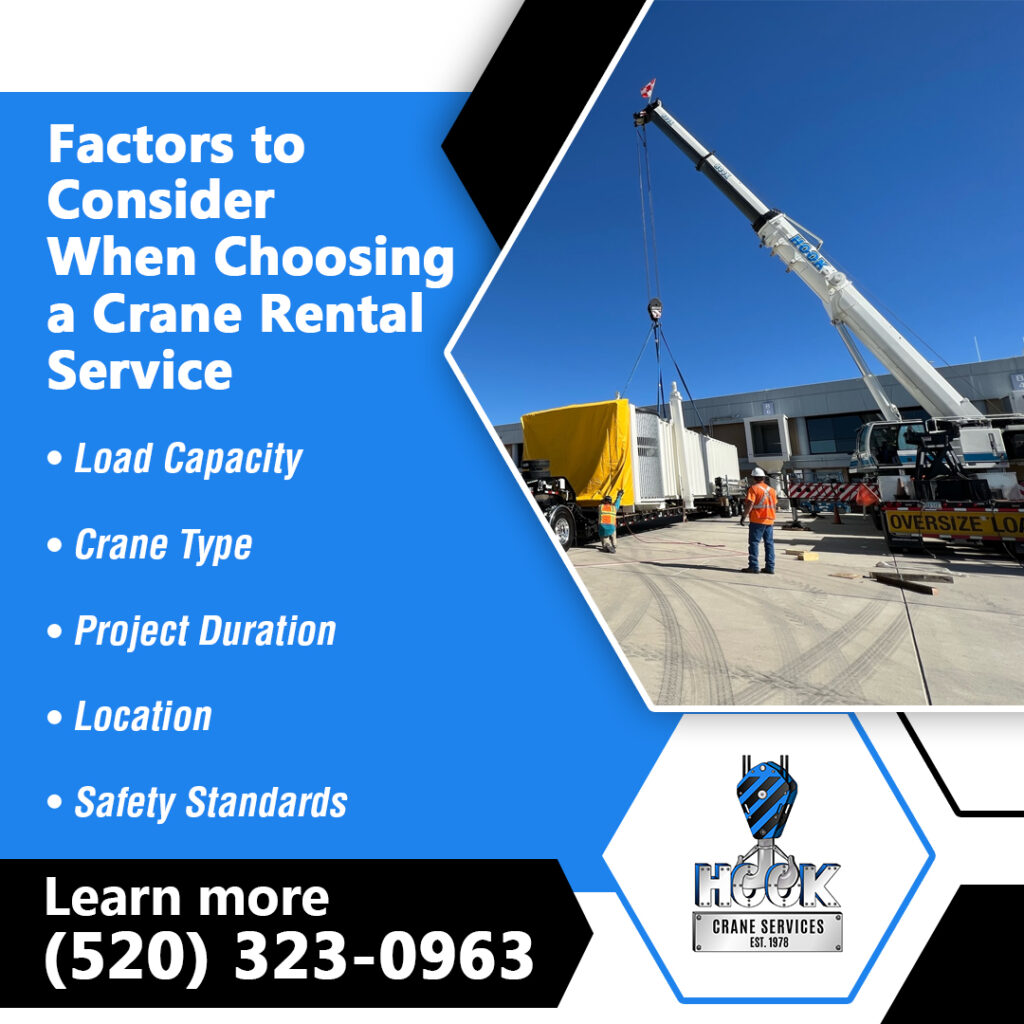
Crane Rental Operational Safety Procedures You Must Know
Crane accidents cost construction companies millions in damages each year. Poor safety practices lead to equipment failure, project delays, and worker injuries. Choosing a reputable crane rental service near you means prioritizing strict safety protocols to protect both your project and your team.
Hook Crane Services has operated accident-free in Tucson since 1978. Our crane rental agency follows strict federal safety standards on every project. Construction sites with proper safety procedures reduce accident rates by 75%, according to industry data. We apply these proven methods to protect your workers and equipment.
Your project’s success depends on choosing the right crane rental agency near you. Safety training, equipment maintenance, and regulatory compliance separate professional services from basic equipment providers. Our crane rental company in Tucson combines decades of experience with modern safety technology.
What Safety Inspections Must You Complete Before Operating a Crane?
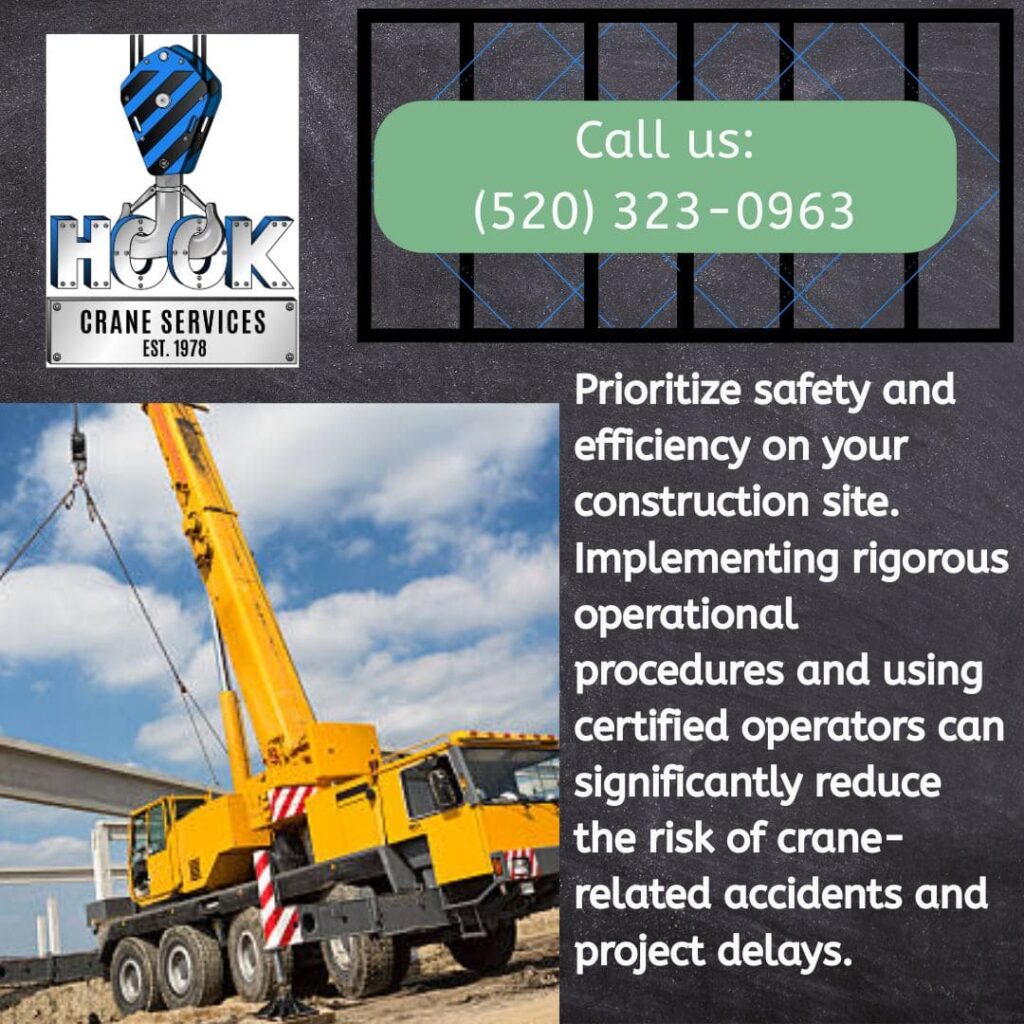
Daily safety inspections must cover all critical crane components before operation begins. Every crane rental service should conduct thorough equipment checks each morning. These inspections prevent mechanical failures that cause serious accidents.
Critical Component Examination
Pre-operation inspections include load blocks, wire ropes, and hydraulic systems. Hook Crane Services operators examine each component systematically. All cranes are thoroughly safety-checked before leaving our facility.
Safety System Testing
The inspection process also covers control systems and outrigger functionality. Operators test all safety devices and warning systems. Documentation proves each crane meets operational safety standards.
How Do You Determine Safe Load Limits for Crane Operations?
Load capacity calculations must account for boom length, working radius, and ground conditions. Never exceed manufacturer specifications under any circumstances. Load charts provide exact weight limits for different crane configurations.
Hook Crane Services provides detailed capacity documentation with every rental. These charts show maximum loads at various boom angles and extensions. Ground conditions and wind speeds also affect safe lifting capacity.
Load moment indicators on modern cranes prevent overloading automatically. These systems calculate real-time capacity based on boom position. As a trusted crane rental service in Tucson, we include this safety technology on all equipment.
| Safety Factor | Standard Requirement | Hook Crane Services Standard |
| Load Capacity | Manufacturer rating | 85% of rated capacity |
| Wind Speed Limit | 25 mph | 20 mph |
| Ground Slope | 1% maximum | Level ground preferred |
| Operator Certification | NCCCO required | NCCCO + annual training |
| Daily Inspections | Basic checklist | 47-point inspection |
What Operator Qualifications Are Required for Safe Crane Operations?
All crane operators must hold a valid NCCCO (National Commission for the Certification of Crane Operators) certification. This certification proves operators understand safety protocols and equipment operation. Additional training updates keep operators current with new regulations.
Certification Standards
Our crane rental service employs only certified operators with proven safety records. Each operator completes annual refresher training and emergency response drills. MSHA certification adds mining industry safety knowledge for specialized projects.
Physical and Mental Requirements
Operator qualification includes written exams, practical testing, and medical clearance. Vision tests and physical assessments confirm operators can perform safely. Background checks verify clean driving records and safety compliance history.
How Do You Establish Safe Working Zones Around Crane Operations?
Safety zones must extend beyond the crane’s maximum working radius plus boom length. OSHA requires specific clearances from power lines and structures. Ground crews need protected areas for rigging and load positioning.
Power line clearances depend on voltage levels and weather conditions. Minimum distances range from 20 feet for low voltage to 50 feet for high voltage lines. Our crane rental agency in Tucson, AZ, surveys all utilities before setup.
Swing radius calculations include the full boom rotation path. No personnel should enter this area during lifting operations. Barricades and warning signs mark all restricted zones clearly.
What Communication Methods Prevent Crane Operation Accidents?
Standard hand signals and two-way radio systems maintain constant communication between operators and ground crews. Visual contact must exist at all times during lifting operations. Signal persons need certification in standard crane communication protocols.
Radio communication provides backup when visual signals become impossible. Multiple frequencies prevent interference from other equipment. At Hook Crane Services, we include professional communication equipment.
Emergency stop signals override all other commands immediately. Any crew member can halt operations when safety concerns arise. This authority prevents accidents when dangerous conditions develop.
How Do Weather Conditions Affect Crane Safety Operations?
Wind speeds above 20 mph create unsafe lifting conditions for most crane operations. Temperature extremes affect hydraulic performance and operator alertness. Rain and ice make surfaces slippery and reduce visibility.
Weather monitoring continues throughout each workday at our projects. Digital wind meters provide real-time measurements at the boom tip level. Operations stop immediately when conditions exceed safety limits.
Cold weather requires hydraulic system warming before operation. Hot weather needs frequent operator breaks and hydration. Our reliable crane rental company in Tucson adjusts schedules based on weather forecasts.
What Emergency Procedures Must You Follow During Crane Accidents?
Immediate work stoppage and area evacuation are the primary responses to any crane emergency. Medical assistance and emergency services receive notification within minutes. Equipment securing prevents additional damage or injuries.
Emergency response plans cover medical situations, equipment failures, and load drops. All personnel know evacuation routes and assembly points. Fire suppression equipment stays readily available on site.
Load recovery requires specialized rigging and additional crane support. Never attempt emergency repairs while loads remain suspended. Our crane rental service provides emergency response coordination when needed.
How Does OSHA Compliance Protect Crane Operations?
OSHA Subpart CC regulations mandate specific safety requirements for all crane operations. Equipment inspections, operator certification, and training documentation are legally required. According to the Bureau of Labor Statistics, crane-related workplace fatalities have declined over time, with OSHA compliance playing a key role in improving safety outcomes.
Annual inspections by qualified inspectors verify crane condition and safety systems. Monthly inspections catch developing problems before they become hazardous. Our crane rental agency maintains complete compliance documentation.
Training records prove operators understand safety requirements and emergency procedures. Incident reporting helps identify trends and prevent recurring problems. Regular safety meetings keep crews updated on new regulations.
What Maintenance Practices Keep Cranes Operating Safely?
Preventive maintenance schedules prevent equipment failures that cause accidents. Daily inspections identify wear patterns and developing problems. Component replacement follows manufacturer recommendations and usage patterns.
Maintenance documentation proves equipment readiness and regulatory compliance. Service records track repairs, replacements, and performance issues. At Hook Crane Services, we receive professional maintenance between every rental.
Critical components need frequent inspection and testing:
- Wire ropes and load blocks require monthly examination
- Hydraulic systems need pressure testing and fluid analysis
- Safety devices receive calibration and function verification
How Do Modern Safety Technologies Enhance Crane Operations?
Load moment indicators automatically prevent crane overloading and tip-over conditions. Anti-two-block systems stop load blocks before they contact boom tips. These technologies eliminate human error in critical safety calculations.
Rated capacity indicators display real-time load information to operators. Warning systems alert crews when approaching capacity limits. Automatic shutdown prevents operation beyond safe parameters.
Hook Crane Services includes the latest safety technology on all equipment. GPS tracking monitors crane location and operating conditions. Remote diagnostics identify potential problems before they affect operations.
What Site-Specific Safety Hazards Require Special Attention?
Underground utilities pose the greatest hidden danger to crane operations. Electrical lines, gas pipes, and water mains can cause catastrophic damage if contacted. Every crane rental service must verify utility locations before digging outrigger pads or positioning equipment.
Arizona’s rocky soil conditions create unique stability challenges for crane setup. Ground penetrating radar helps locate underground obstacles and voids. Our crane rental agency conducts soil bearing tests when conditions appear questionable.
Overhead power lines require constant vigilance during boom movement and load positioning. Electrical arc-over can occur without direct contact when cranes operate too close to energized lines. OSHA mandates specific distances based on voltage levels and weather conditions.
How Do You Calculate Proper Crane Positioning for Maximum Safety?
Crane placement must account for load swing radius, ground conditions, and escape routes. Mathematical calculations determine optimal positioning based on lift requirements and site constraints. Wind direction affects load stability during lifting operations.
Load swing calculations include horizontal movement during lifting and lowering. Suspended loads act like pendulums in windy conditions. Hook Crane Services positions equipment to minimize swing potential and maintain control.
Ground slope affects crane stability and load capacity. Level surfaces provide maximum lifting capability and operator confidence. Slope compensation reduces safe working loads according to manufacturer specifications.
Travel path planning prevents conflicts with other equipment and personnel. Crane movement requires clear routes and an adequate turning radius. Coordination with other trades prevents dangerous interactions during operations.
What Special Safety Procedures Apply to Mobile Crane Operations?
Mobile cranes require additional safety measures for transportation and setup compared to stationary equipment. Highway travel demands proper load securement and route planning. DOT regulations govern crane transportation on public roads.
Transportation Safety Requirements
Outrigger setup procedures must follow specific sequences to prevent tipping. Float positioning spreads crane weight across larger ground areas. Our crane rental agency in Tucson, AZ, uses engineered outrigger pads for maximum stability.
Setup and Assembly Protocols
Boom securement during transport prevents structural damage and highway hazards. Tie-down points and securing hardware meet DOT specifications. Load charts verify transport configurations stay within legal weight limits.
Setup time requirements include ground preparation and equipment assembly. Rush setup procedures increase accident risk greatly. Proper positioning takes time but prevents costly mistakes and safety incidents.
How Do Environmental Factors Impact Crane Safety Decisions?
Temperature extremes affect both equipment performance and operator capabilities. Tucson’s desert climate creates specific challenges for crane operations throughout the year. Summer heat requires modified work schedules and additional operator breaks.
Hydraulic fluid viscosity changes with temperature variations. Cold-weather startup procedures warm systems gradually to prevent damage. Hot weather operations monitor fluid temperatures to avoid overheating and system failures.
Dust storms reduce visibility and create respiratory hazards for ground crews. Equipment covers protect sensitive components from dust infiltration. Operations cease when visibility drops below safe levels for crane operations.
Wildlife encounters, particularly with birds and desert animals, can create unexpected hazards. Nesting birds in crane structures require removal before operations begin. Snake awareness training protects ground crews in desert work environments.
What Documentation Requirements Support Safe Crane Operations?
Complete documentation proves safety compliance and protects against liability claims. Daily inspection reports provide written evidence of equipment condition. Operator certification records verify personnel qualifications for insurance purposes.
Maintenance logs track service history and component replacement schedules. These records help predict when parts need replacement before failures occur. As a reliable crane rental company in Tucson, we maintain detailed service documentation for every machine.
Incident reports capture near-miss events and actual accidents for analysis. Root cause investigations prevent similar occurrences in the future. Learning from mistakes improves safety procedures across all operations.
Training documentation shows operator knowledge and skill development over time. Annual recertification proves continued competence in safe operating practices. Safety meeting records demonstrate an ongoing commitment to accident prevention.
How Do You Coordinate Multiple Cranes for Complex Lifting Operations?
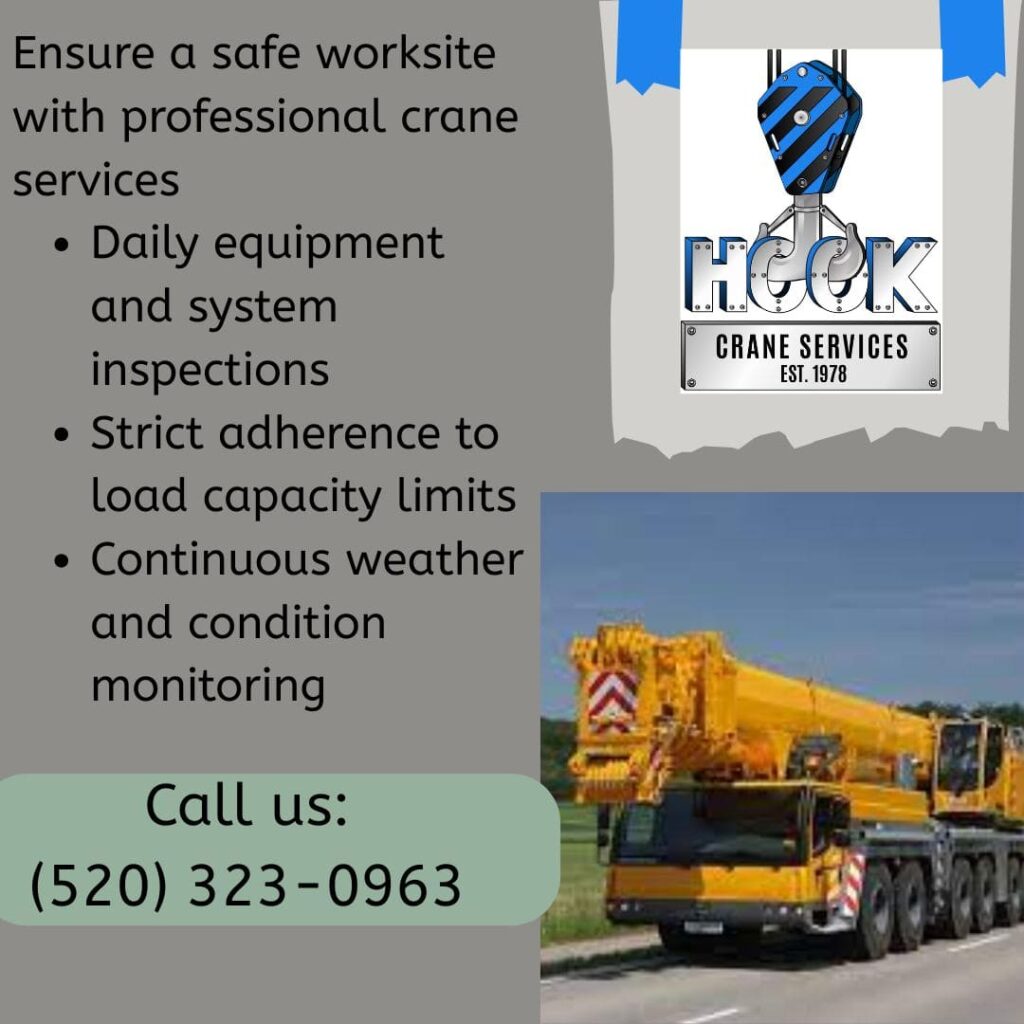
Multiple crane lifts require detailed planning and specialized coordination procedures. Load distribution calculations determine each crane’s lifting percentage and positioning requirements. Radio communication becomes more complex with multiple operators involved.
Critical lift planning involves engineering analysis and step-by-step procedures. Each crane operator understands their specific role and responsibilities. Ground crews coordinate movements to prevent conflicts between machines.
Our crane rental service provides project coordination for complex multi-crane operations. Experienced lift directors manage communication and timing for successful completion. Safety margins increase when multiple machines work together on a single load.
Your Project Deserves Proven Safety Excellence
Safe crane operations protect workers, equipment, and project schedules. When you choose Hook Crane Services for your crane rental needs, you receive professionally maintained equipment operated by certified professionals. Our accident-free record since 1978 demonstrates our commitment to operational safety.
Every aspect of our crane rental service prioritizes safety above convenience. From daily inspections to emergency response planning, we maintain the highest safety standards in Southern Arizona. Contact Hook Crane Services – Crane Rental today at (520) 323-0963 or hookcrane@hookcrane.com to discuss your project requirements and experience the difference that professional safety practices make in crane operations.